
Your engine works harder than your drive makes it look.
A normal Philippine drive can combine long idling, repeated acceleration, high ambient heat, humid air, sudden rain, uneven pavement, and slow-moving traffic—sometimes within the same trip.
None of these conditions automatically means your oil is failing. But together they explain why driving pattern matters. PAGASA describes the country as tropical and maritime, with high temperature, high humidity, and abundant rainfall. That environment, combined with congestion and changing road surfaces, can keep an engine cycling through heat, load, and speed changes instead of settling into one steady rhythm.
Traffic, idling, and short trips
In dense city traffic, the engine may stay running while the vehicle barely moves. Air-conditioning, repeated starts, braking, and short errands continually change engine demand. A quick school run or mall trip may end before the engine spends much time at a stable operating condition; a longer crawl through EDSA, C5, or a busy provincial center can mean extended operating time with little distance covered.
That does not make every traffic-heavy trip “severe service” by itself. The useful question is how often this pattern happens, how long the engine remains running, and whether maintenance intervals already account for it.
WHAT TO CONSIDER
Track operating time—not distance alone. Frequent idling, short trips, and stop-go traffic can make two vehicles with the same odometer reading live very different lives. Source context: Philippine DOE guidance discourages unnecessary engine idling as part of fuel conservation.
Tropical heat, humidity, and sudden rain
PAGASA reports a mean annual temperature of 26.6°C across Philippine weather stations outside Baguio, with the warmest monthly mean in May. Average monthly relative humidity ranges from about 71% to 85%. The temperature outside is not the same as oil temperature inside an operating engine, but hot, humid conditions shape the environment in which the cooling and lubrication systems work.
Research on engine lubricants identifies elevated temperature and oxidation as connected degradation factors. This is why oil quality, the correct grade, and appropriate change intervals matter—but weather alone cannot tell you whether oil is still serviceable. Sudden rain and floodwater add a different risk: never treat driving through deep water as an ordinary lubrication question. If water intrusion is suspected, stop and seek qualified inspection.
WHAT TO CONSIDER
Do not diagnose oil condition from the weather or dashboard temperature alone. Follow the manufacturer’s viscosity, performance specification, and service schedule. After suspected flood exposure, get the vehicle inspected before restarting.
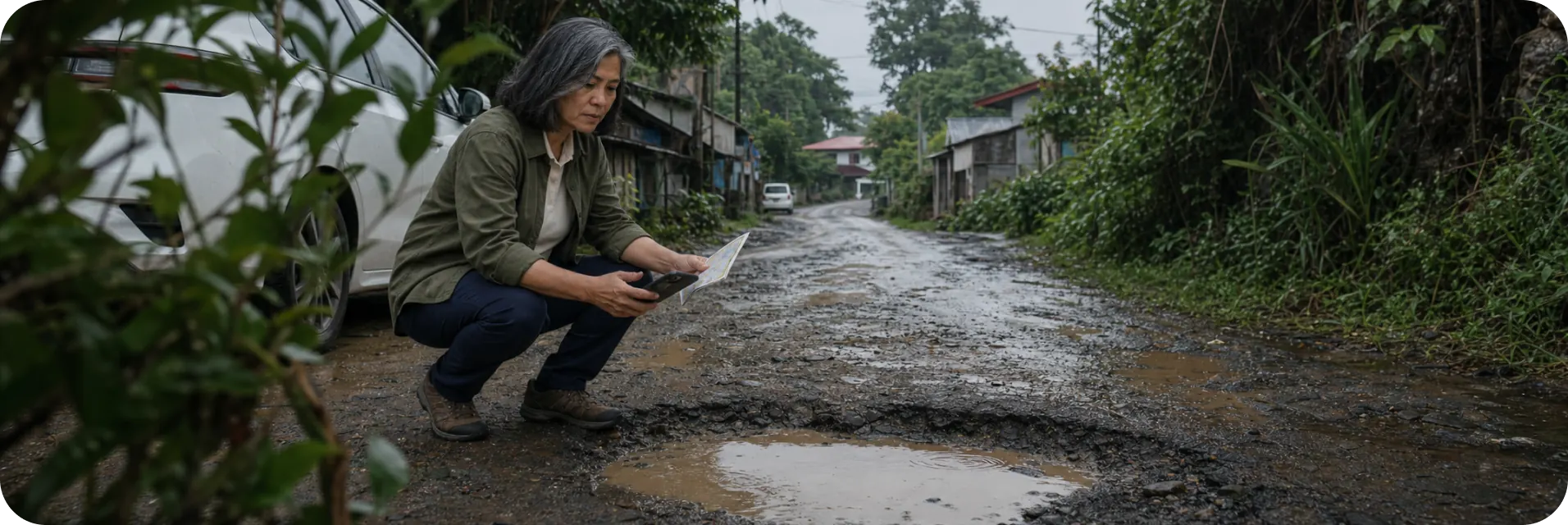
Potholes, rough roads, dust, and long drives
Philippine road conditions can change quickly—from smooth expressway pavement to patched asphalt, broken shoulders, construction dust, steep provincial climbs, and repeated potholes. DPWH’s national-road maintenance policy explicitly identifies potholes, alligator cracks, depressions, shoulder defects, and clogged drains among defects that require inspection and response.
The road surface does not directly “damage the oil.” Its effect is indirect: drivers slow, accelerate again, climb, carry changing loads, and sometimes operate in dusty or wet conditions for long periods. A highway run to Zambales, a mountain climb to Baguio, and a daily provincial commute may cover similar distances while placing very different demands on the vehicle.
WHAT TO CONSIDER
Build the full picture: vehicle type, passenger or cargo load, route gradient, dust, water exposure, trip duration, traffic frequency, and the manufacturer’s requirements. Distance is only one part of the story.
THE USEFUL TAKEAWAY
Start with the specification your vehicle requires.
Then use your real Philippine driving pattern to understand which oil qualities and maintenance conversations matter most.